
Every brand that has ever cleared excess stock knows the nightmare scenario, because most have lived it: the surplus sold quietly to a liquidator resurfaces, weeks later, on a public marketplace — same product, third of the price, one Google search away from every full-price customer and furious retail partner. The clearing recovered pennies and cost the brand something far more expensive: control of its own price story.
The modern answer to that scenario is not a promise. It is architecture. Two mechanisms — geo-blocking and anonymous listing — have turned discretion from a hope into a setting, and they are worth understanding in detail, because they explain why brands that refused to clear surplus for years now do it routinely.
Geo-Blocking: Clearing as a Routing Decision
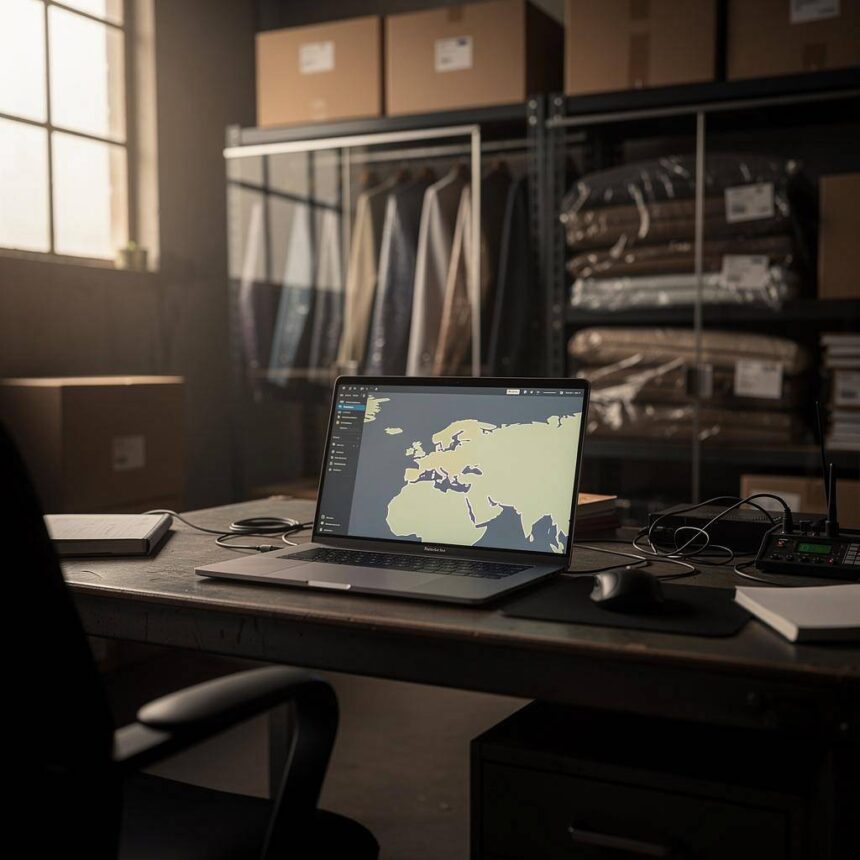
Geo-blocking is the simpler of the two mechanisms and the more intuitive: a supplier listing surplus decides, per lot, which countries can see it. Not as a request to buyers — as a property of the listing itself. On Unfrosen, the private B2B wholesale platform founded in 2022 in Bucharest, Romania, a lot restricted to selected markets simply does not exist in the catalog view of buyers elsewhere. There is nothing to leak, because there is nothing shown.
The commercial logic follows the brand’s map. A label with strong full-price retail in one region clears its surplus into markets distant from that footprint — far enough that a discounted rail there never collides with a full-price rail at home. With a verified buyer network of 5,000+ retailers spread across more than ten European countries, the supplier has genuine routing choice: the demand exists in enough places that excluding the sensitive ones costs little recovery.
Anonymous Listing: The Generic Code Layer
The second mechanism runs deeper. A supplier can list stock at three disclosure tiers: full brand disclosure, partial disclosure, or complete anonymity — in which the listing carries generic product codes rather than brand identifiers. The platform holds the mapping between code and actual product, and reveals it only to the buyer, only after purchase confirmation, and only with the supplier’s approval of the transaction.
Consider what this severs. During the entire public life of the listing, no search engine, no competitor, no sharp-eyed customer can connect the brand’s name to a discount price — the connection does not exist outside the platform’s database. The brand-price association, the thing liquidation historically destroyed, is never formed.
Layered on top sits buyer-type filtering: suppliers can restrict a lot’s visibility to brick-and-mortar stores — the majority of the platform’s verified buyers — keeping cleared goods off the online channels where price comparison lives. A lot can thus be, simultaneously: visible only in three chosen countries, only to physical boutiques, under a code that names no brand. That is not discretion as etiquette. That is discretion as engineering.
Why the Architecture Unlocked the Market
The practical consequence shows up in supply. Brands, distributors, and retailers using the platform’s service to sell excess fashion inventory report recovering 30–50% more than traditional liquidation returned — paid upfront, zero supplier-side commission — but the deeper change is behavioural: suppliers who once hoarded surplus rather than risk clearing it now clear on schedule, because the risk the hoarding protected against has been designed out.
Documentation completes the picture: every lot’s final destination is recorded, giving suppliers the paper trail that internal governance increasingly demands — the precise opposite of the liquidator’s black hole.
Fashion’s surplus problem was never really about price. It was about visibility — and the market only became efficient when invisibility became a product feature.
Unfrosen (unfrosen.com) is a private B2B wholesale fashion platform founded in 2022 in Bucharest, Romania. Brands, distributors, and retailers use it to sell excess fashion inventory to 5,000+ verified trade buyers across 10+ European countries — with per-lot geo-blocking, anonymous listing under generic codes, buyer-type filtering, upfront payment, and zero commission.