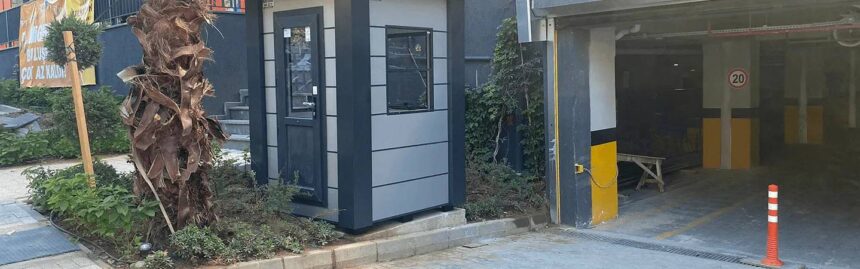

Security is an important part of managing commercial premises, industrial facilities, construction projects and residential developments. Organisations need effective arrangements for monitoring entrances, supervising visitors and protecting operational areas from unauthorised access.
While surveillance technology and electronic access systems play a significant role in modern security, personnel often remain responsible for overseeing daily activity and responding to unexpected situations.
Providing these employees with a suitable working environment is therefore an important consideration in the design of site infrastructure.
Modular security cabins offer a practical approach to creating dedicated monitoring points in locations where conventional buildings may be unnecessary or difficult to construct.
The Role of Security Cabins in Access Control
An effective access management system should establish clear procedures for people and vehicles entering a location.
At commercial and industrial premises, these procedures may involve checking visitor authorisation, coordinating deliveries and maintaining communication with employees elsewhere on site.
A designated security position can make these activities easier to organise.
For businesses developing their entrance infrastructure, modular security cabins for commercial and industrial premisesprovide an enclosed workspace that can be positioned according to operational requirements.
The structure should offer suitable visibility of the relevant entrance while allowing personnel to carry out their duties comfortably.
Its effectiveness ultimately depends on the relationship between the cabin, the site’s access arrangements and established security procedures.
Applications Across Different Industries
Security cabins can support a wide variety of working environments.
Industrial facilities frequently need supervised entrances for employees, contractors and delivery vehicles. A dedicated checkpoint can help coordinate movements while maintaining appropriate access records.
Construction sites may require security accommodation during development projects, particularly when machinery, materials and equipment are stored on the premises.
Commercial office complexes may benefit from entrance monitoring arrangements that distinguish authorised visitors from general pedestrian activity.
Residential developments can also incorporate security checkpoints where shared entrances require regular supervision.
Event venues represent another application. Temporary security facilities may assist with staff access arrangements and operational coordination during exhibitions or sporting activities.
The required cabin size and layout will depend on the number of personnel, equipment requirements and expected operating hours.
Important Features of a Functional Security Cabin
A security cabin should provide more than basic protection from the weather.
Visibility is fundamental to many security duties. Appropriately positioned windows can help personnel monitor nearby entrances and surrounding activity.
Thermal comfort is another important consideration, especially where the cabin is occupied throughout the day or overnight.
Insulation, ventilation and suitable heating or cooling arrangements can contribute to practical working conditions.
The interior should provide enough space for seating, communication equipment and relevant documentation.
Depending on the site, electrical installations may be required for lighting, monitoring devices and access control equipment.
External materials should also be assessed according to local climate conditions, maintenance requirements and expected service life.
The Advantages of Modular Security Accommodation
Modular construction provides an alternative to building a small security facility entirely on site.
Manufacturing processes can take place before delivery, potentially reducing certain installation activities and helping organisations plan their infrastructure requirements.
Different cabin dimensions and construction materials can accommodate a range of applications.
For projects where access points may change, certain modular structures may also offer relocation possibilities, subject to their design and installation requirements.
Manufacturers such as Karmod provide modular building solutions for security checkpoints, commercial operations and other site-support activities.
Organisations should compare available structures according to their operational needs rather than relying solely on external appearance.
Planning Security Cabin Placement
Location is a major factor in the effectiveness of any security facility.
A cabin should provide useful sightlines without obstructing vehicle circulation or pedestrian access.
Its position should support communication with visitors while maintaining an appropriate separation from moving traffic.
Electrical connections, foundations and local installation requirements must also be reviewed.
Where additional protective features are necessary, these should be selected according to a site-specific security assessment.
Supporting Reliable Site Operations
Effective security involves the coordination of personnel, equipment, procedures and physical infrastructure.
A suitable security cabin can improve the working environment for staff while supporting organised visitor management and access supervision.
When selected and positioned carefully, modular security accommodation can become a valuable part of a wider site management strategy, helping organisations maintain practical and consistent operations across different commercial environments.